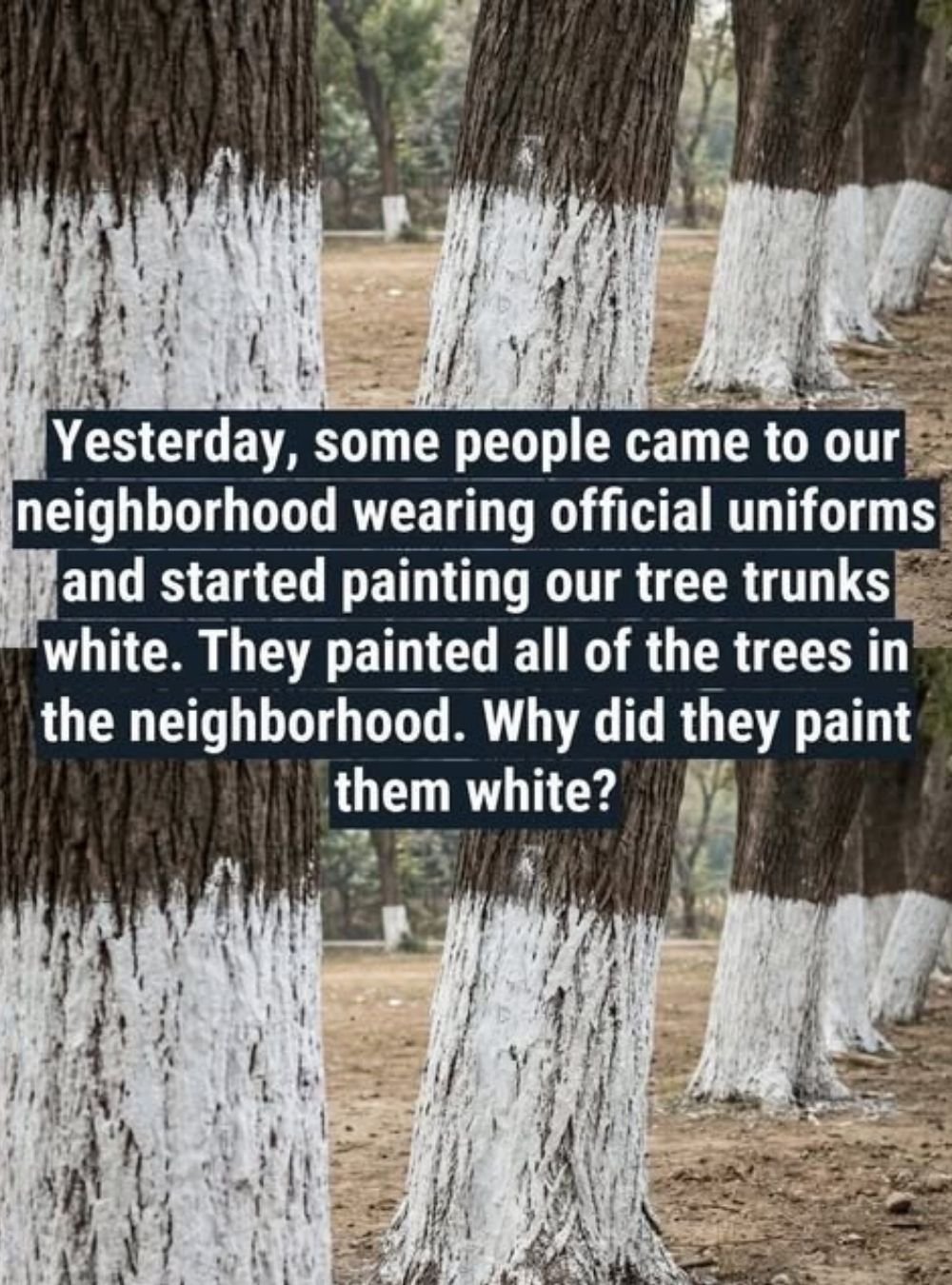
You’ve probably seen it before without giving it much thought—a tree with the lower part of its trunk painted white. It can look a little odd, even decorative, as if someone decided to give the tree a makeover. But that white paint isn’t there for looks at all.
In reality, it serves a very practical purpose tied directly to the tree’s survival.
Trees, especially young or thin-barked ones, are vulnerable to sudden temperature changes. During winter, cold nights followed by bright, sunny days can cause the bark to heat up too quickly. When temperatures drop again, the rapid contraction can damage the trunk. This stress often leads to cracking, splitting, or peeling—an issue commonly known as sunscald.
Painting the lower trunk white helps prevent this damage. The light color reflects sunlight instead of absorbing it, keeping the bark at a more stable temperature throughout the day. By reducing overheating, the paint lowers the risk of cracks that can weaken the tree and invite disease or pests.
This practice is especially common in orchards, home gardens, and residential areas where trees are younger or more exposed. Fruit trees, in particular, benefit from this added protection, as damaged bark can affect both growth and productivity.
Gardeners usually use water-based white latex paint for this purpose, often diluted with water to ensure the tree can still breathe. A common mixture is equal parts paint and water, creating a thin, protective coating rather than a thick layer. Some caretakers add joint compound to the mix, which can offer extra protection against insects that bore into the wood.
The paint is typically brushed on rather than sprayed, allowing for better coverage and longer-lasting results. Many people repeat the process annually, much like giving the tree a seasonal shield before harsh weather arrives.
It’s worth noting that tree markings can mean different things. Bright colors like orange or purple may signal boundaries, inspections, or planned removal. But white paint on a trunk carries no warning or message—it’s purely protective.
So when you see a tree with its base painted white, you’re not looking at decoration. You’re seeing a quiet sign of care. It’s a simple, thoughtful step taken to protect the tree’s health, strength, and future—ensuring it can continue to grow and thrive for years to come.