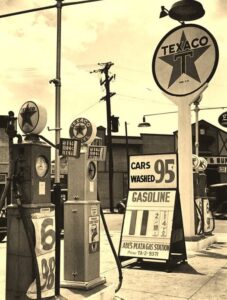
There was a time when something as ordinary as stopping for fuel felt like a small, almost charming experience. It wasn’t just about filling up your tank and driving off as quickly as possible. Instead, service stations were thoughtfully designed spaces—places that reflected creativity, craftsmanship, and even a sense of pride.
Today, most gas stations are built for efficiency. They are practical, consistent, and designed with convenience in mind. While they serve their purpose, they often lack personality.
But in decades past, service stations were different.
They weren’t just functional—they were stylish.
And in many cases, they were surprisingly beautiful.

When Design Mattered — Even for Gas Stations
Looking back, one of the most striking differences between past and present service stations is the attention to design.
Older stations weren’t just built to house fuel pumps. They were designed with architectural flair, often reflecting popular styles of the time. From clean geometric lines to bold decorative elements, these stations had a presence that made them stand out.
It’s difficult to imagine something like an Art Deco-inspired gas station being constructed today. Modern designs tend to prioritize uniformity and cost-efficiency over artistic expression.
But in the early to mid-20th century, aesthetics mattered—even in everyday places.
Service stations were part of the community landscape. They were visible, frequently visited, and often served as local landmarks.

The Charm of Art Deco Service Stations
One of the most memorable styles seen in vintage service stations is Art Deco.
This design movement, known for its bold lines, symmetry, and decorative details, influenced architecture across many industries—including fuel stations.
An Art Deco service station wasn’t just a stop along the road—it was an experience.
Picture smooth curves, polished surfaces, and carefully designed signage. Even the lighting fixtures were often unique, adding to the overall atmosphere.
Some stations featured decorative globes atop their pumps, glowing softly and creating a welcoming environment, especially at night.
These weren’t just practical elements—they were part of a larger visual story.

A Glimpse Into the Past: The Shell Station Era
Imagine pulling into a vintage Shell service station during its prime.
The building itself might feature clean lines and distinctive branding, while the pumps stand proudly out front, topped with illuminated globes shaped like shells.
These details may seem small, but they contributed to a sense of identity.
Each brand had its own look, its own personality.
And customers noticed.
These stations weren’t interchangeable—they were memorable.
The 1950s: A Time of Growth and Innovation
By the 1950s, service stations had become a familiar part of American life.
Car ownership was increasing, and road travel was becoming more common. As a result, service stations expanded not only in number but also in the services they offered.
A station in Pensacola, Florida, from 1955 reflects this era well.
It wasn’t just a place to refuel—it was a place where customers could receive assistance, ask questions, and even have minor repairs done.
Attendants often greeted drivers, checked oil levels, cleaned windshields, and ensured that everything was running smoothly.
There was a human element that made the experience feel personal.
More Than Fuel: The Multi-Service Stations of the 1960s
By the early 1960s, service stations had evolved even further.
They weren’t limited to automotive needs.
In some cases, they offered a surprising range of services.
For example, a service station and shop from 1962 in Florida displayed signs indicating that it accepted Green Stamps—a popular rewards program at the time.
Customers could collect these stamps and redeem them for household items, making everyday purchases feel more rewarding.
Even more interesting, some stations advertised radio repair services.
This highlights how versatile these locations were.
They weren’t just stops for drivers—they were community hubs where people could take care of multiple needs in one place.
Unique and Unforgettable: The Teapot Dome Station
Among the many unusual service stations built during the early 20th century, one stands out for its creativity.
The Teapot Dome gas station in Zillah, Washington, originally constructed in 1922, is a perfect example of how imaginative these structures could be.
Shaped like a teapot, this station wasn’t just functional—it was whimsical.
It captured attention immediately, turning a simple fuel stop into something memorable.
Over time, the station was relocated and restored, preserving its historical significance.
Although it no longer operates as a working service station, it remains a symbol of a time when even everyday buildings were designed with personality.
Early Service Stations and Hands-On Care
In the 1920s, service stations often emphasized hands-on assistance.
A station in Minneapolis from 1922 advertised “expert greasing,” a service that was essential for maintaining vehicles of that era.
Cars required more frequent maintenance, and service stations played a crucial role in keeping them operational.
Attendants were skilled, knowledgeable, and actively involved in the process.
Customers didn’t just pull up and handle everything themselves.
Instead, they relied on trained individuals who took pride in their work.
The Rise of Recognizable Brands
As time went on, certain brands became closely associated with service stations.
One example is the “76” station, photographed in 1979.
By this point, branding had become more prominent.
Logos, colors, and signage were carefully designed to create a consistent identity across locations.
Even so, these stations still retained elements of individuality.
They weren’t completely standardized.
There was still room for variation, creativity, and local character.
What Made These Stations So Memorable?
So what exactly set these older service stations apart?
It wasn’t just one thing.
It was a combination of factors that created a unique experience.
Attention to Detail
From the design of the buildings to the shape of the pumps, every detail was considered.
Nothing felt purely functional.
Even practical elements were designed with style in mind.
Human Interaction
Service stations were staffed by attendants who interacted directly with customers.
This added a personal touch that is largely absent today.
Drivers didn’t just stop for fuel—they engaged with people.
Community Presence
These stations were often part of the local community.
They weren’t just places to refuel—they were places where people connected.
Durability and Craftsmanship
Many older stations were built using durable materials.
They were designed to last, both structurally and visually.
Why Modern Stations Feel Different
In contrast, today’s gas stations are designed with efficiency as the primary goal.
They are quick, convenient, and standardized.
While this approach has its advantages, it often results in a lack of uniqueness.
Modern stations are built to serve a purpose—and they do so effectively.
But they rarely evoke the same sense of charm or nostalgia.
The Role of Nostalgia
Part of what makes vintage service stations so appealing is nostalgia.
They remind us of a time when things felt slower, more deliberate, and more personal.
Even for those who didn’t experience that era firsthand, there’s something appealing about the idea of it.
It represents a different way of life.
A Changing Landscape
As technology and society have evolved, so too have service stations.
Self-service has replaced full-service in many areas.
Automation has reduced the need for human interaction.
Design has become more uniform.
These changes reflect broader shifts in how we live and work.
Preserving the Past
Fortunately, some historic service stations have been preserved or restored.
These sites serve as reminders of what once was.
They offer a glimpse into a time when design, service, and community were closely intertwined.
Preservation efforts ensure that future generations can appreciate these unique structures.
Lessons From the Past
Looking back at these vintage stations, there are lessons to be learned.
They show the value of thoughtful design.
They highlight the importance of human connection.
And they remind us that even the most ordinary places can be made extraordinary.
Could This Style Ever Return?
It’s unlikely that we’ll see a widespread return to the elaborate designs of the past.
However, there is growing interest in retro aesthetics and vintage-inspired architecture.
Some modern businesses are beginning to incorporate elements of classic design into their spaces.
This suggests that the appreciation for style and character hasn’t disappeared—it has simply evolved.
Final Thoughts
Service stations of the past were more than just places to refuel.
They were thoughtfully designed, carefully built, and deeply connected to the communities they served.
From elegant Art Deco structures to creative landmarks like the teapot-shaped station, these places reflected a level of care and creativity that is rarely seen today.
While modern gas stations prioritize efficiency, the charm of vintage stations continues to capture our imagination.
They remind us that even the simplest parts of daily life can be infused with beauty, character, and meaning.
And perhaps that’s why we still find ourselves drawn to them—long after their time has passed.