What It’s Called
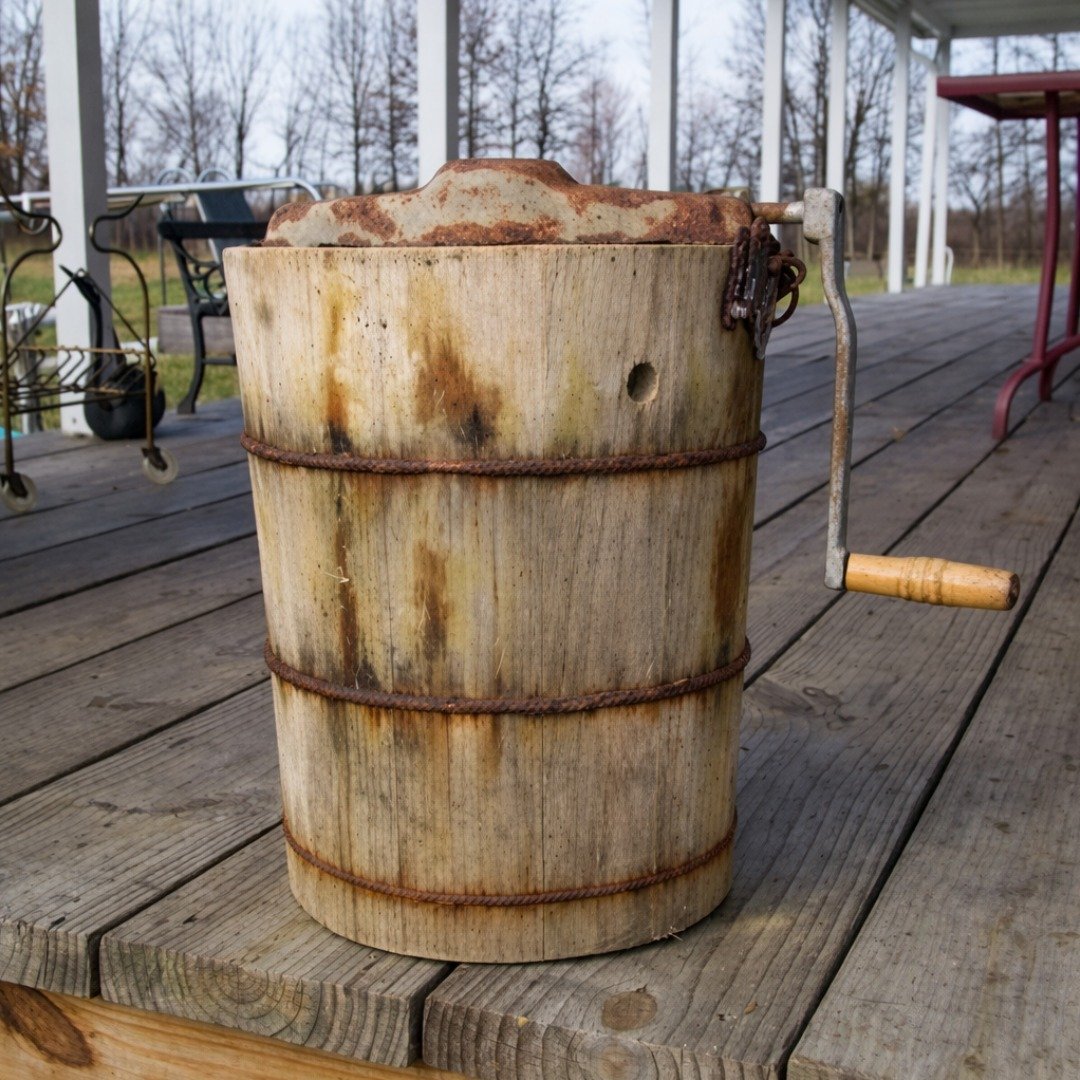
- Name: Vintage White Mountain Freezer Ice Cream Maker (often referred to as a hand-cranked ice cream freezer)
- Type: Manual, crank-operated ice cream maker designed in the classic “bucket and dasher” style
What You’re Seeing in the Photo
- A wooden outer tub reinforced with metal bands
- A hand crank mounted at the top/side (used to rotate the internal mechanism)
- A rugged, utilitarian build made for repeated seasonal use on porches, farms, and family gatherings
When This Style Began
- The tradition of making ice cream with old-fashioned, hand-cranked machines is commonly traced to 1843, when Nancy Johnson received a U.S. patent for an early ice cream freezer design.
- That invention helped standardize the basic approach still associated with many “vintage freezer” makers today: crank + dasher + ice-and-salt chilling.
Who Created It (Historical Credit)
- Nancy Johnson (1843): Widely credited with patenting an early, influential design for a hand-cranked ice cream freezer in the United States.
- White Mountain Freezer (brand context): “White Mountain” became a well-known name associated with durable, traditional-style ice cream freezers, often featuring a wooden tub and hand crank design for home use.
What It’s For (Purpose and Function)
- Primary purpose: To freeze and churn an ice cream mixture into a smooth, scoopable dessert.
- How it works (in plain terms):
- The ice cream mixture is placed in an inner metal canister (not visible from the outside in many photos).
- The outer tub is packed with ice and salt around the canister.
- Turning the hand crank moves a dasher/paddle inside the canister, continuously mixing while the cold environment freezes the mixture.
- Churning reduces large ice crystals, helping create a creamier texture.
Why It Became a Household Staple
- No electricity required — ideal for homes before modern appliances and still useful outdoors.
- Built for group occasions — a social, hands-on process that turned dessert-making into an activity.
- Known for durability — wooden tubs and metal fittings were designed to handle years of seasonal use.
Key Takeaways
- Core identity: A hand-cranked ice cream freezer in the White Mountain tradition
- Historical anchor: The hand-crank ice cream freezer concept is closely linked to 1843 and Nancy Johnson’s U.S. patent
- Enduring value: A practical tool that also represents a nostalgic, community-centered way of making homemade ice cream