I am seventy-five years old, born and raised in Tennessee, and for most of my life I’ve had a quiet habit of making space for what the world has already decided to discard. It wasn’t a plan or a calling I chose out loud. It simply unfolded, slowly, over years, one small life at a time.
As a child, it began with injured birds I found near the creek. I would cradle them, do what little I could, and feel like it mattered. Later, after my husband and I bought our modest house, that instinct shifted to stray cats—thin, frightened creatures who lingered on the porch until they became part of the household. When my husband passed away, the house grew unbearably silent, and that was when the dogs entered my life.
Not the ones people fight over at adoption events. Not the puppies with perfect bodies and endless energy. I took in the broken ones. The anxious ones. The dogs who already understood what abandonment felt like.
That is how Pearl and Buddy became mine.
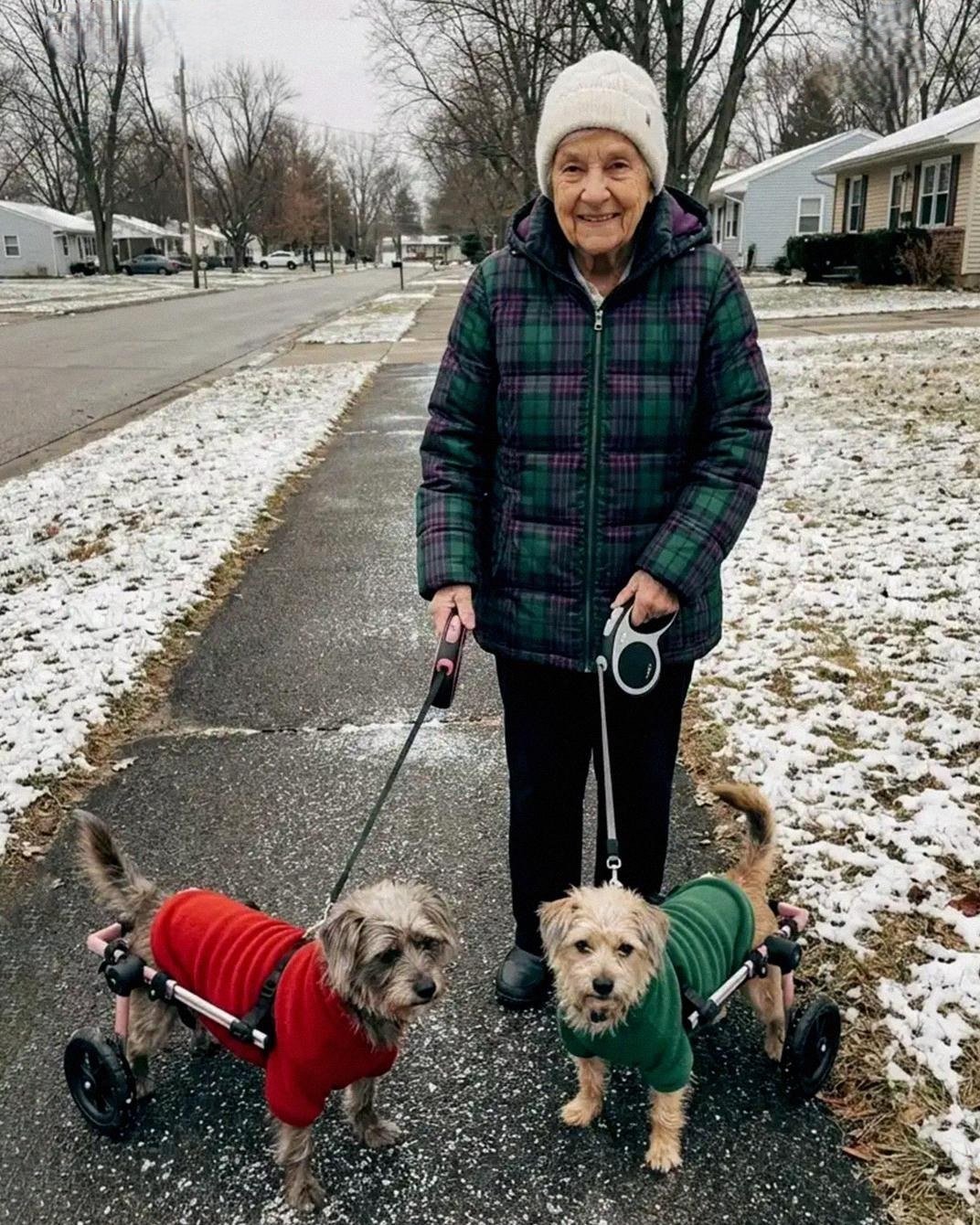
They are small dogs, each weighing less than twenty pounds, and neither can use their back legs. Pearl was struck by a car before I found her. Buddy was born the way he is. A rescue organization fitted both of them with small wheel carts, and those wheels gave them their freedom back.
My dogs don’t walk or run like others. They roll.
Their carts make a gentle clicking sound on the pavement, and when they move, their entire bodies seem joyful. Their tails wag with a confidence that feels innate, as if happiness was never something they forgot—only something waiting to be expressed.
When we go out, most people respond kindly. Children wave and ask questions. Adults stop, kneel down, ask for their names, and tell me how special they are. Anyone paying attention can see it right away—these dogs are survivors.
Last Tuesday started like any other. Warm air, soft sunlight, half the street in shade. Pearl rolled ahead, inspecting every mailbox like it held a secret just for her. Buddy stayed close by my ankle, his wheels gently bumping the curb.
We were halfway down the block when Marlene came outside.
She lives three houses away. Mid-fifties, always neat and put together, as though she’s perpetually headed somewhere more important than her own front yard. Everyone knows she watches the street through her blinds, acting as though the block belongs to her.
Her gaze landed on Pearl’s wheels—not with curiosity, but with something sour. Her face twisted like she’d caught a bad smell.
Then she spoke, loud enough for anyone nearby to hear.
“Those dogs are disgusting.”
I stopped so suddenly my shoes scraped the pavement.
Pearl looked up at me, ears twitching, eyes open and trusting. Buddy rolled in place, confused by the pause.
Marlene folded her arms and stepped closer. “This isn’t a shelter. People don’t want to see that. Get rid of them.”
For a moment, I couldn’t speak. Heat rose up my neck. My chest tightened. I’d been insulted before in my life—but never had anyone spoken about my dogs as if they were trash.
I met her eyes, and my mother’s voice came out of my mouth.
“Bless your heart,” I said evenly. “Those dogs saved me, not the other way around.”
Her expression hardened. She leaned in, voice sharp. “Either you get rid of them, or I’ll make sure you do.”
Then she turned and went back inside, shutting her door as casually as if she’d commented on the weather.