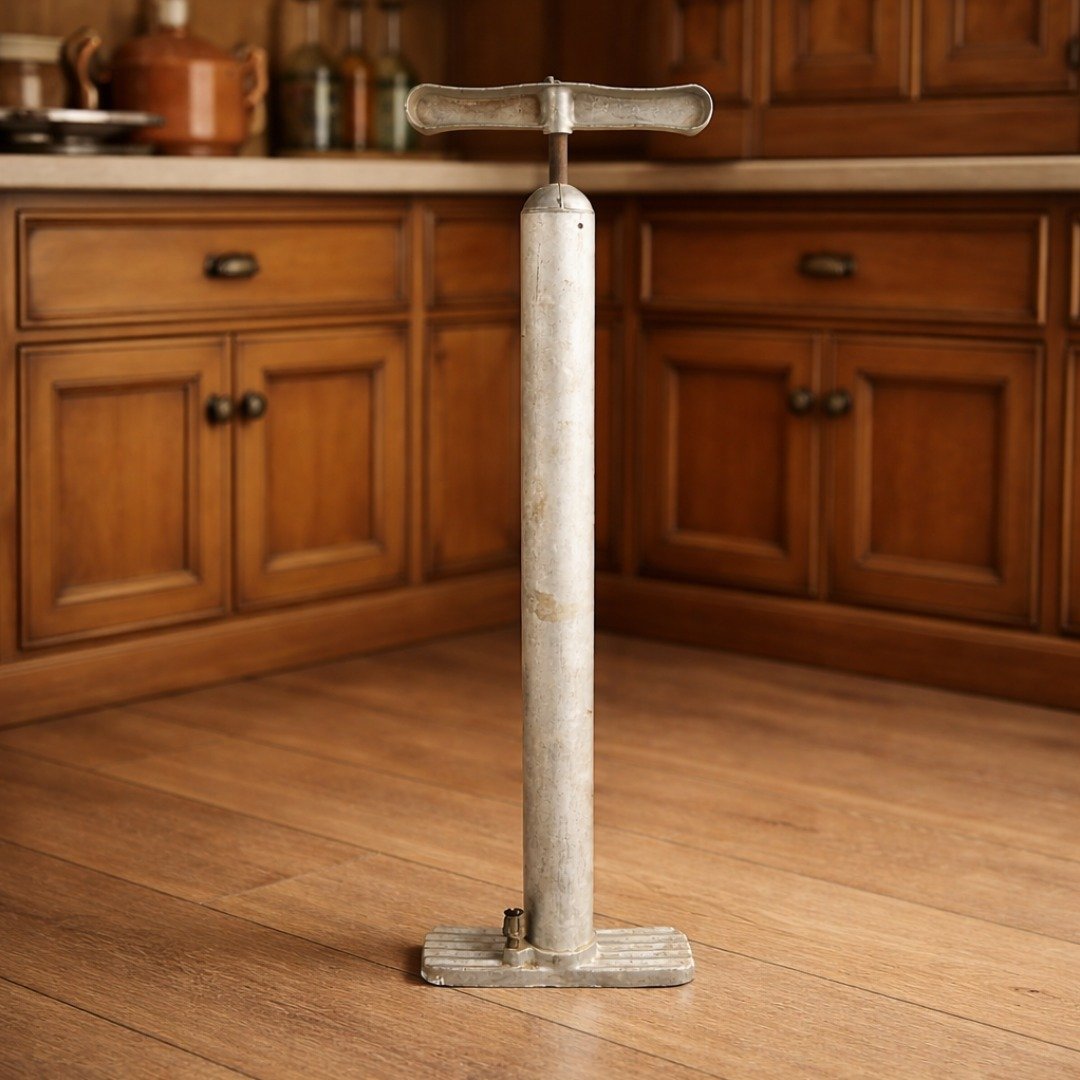
What It’s Called
- Common name: Bicycle pump
- Also known as: floor pump, stand pump, hand pump (portable versions), vintage bicycle inflator
- What the image shows: a classic metal floor-style bicycle pump with a T-handle, cylindrical barrel, and foot base for stability
When It First Appeared
- Bicycle pumps became widely necessary and common in the late 1800s, especially after pneumatic bicycle tires spread in the 1890s
- Key timeline (context):
- 1888: Pneumatic bicycle tires were popularized, which made regular inflation part of everyday cycling
- 1890s–early 1900s: Portable and floor bicycle pumps became standard accessories sold with or alongside bicycles
Who Created It
- There is no single inventor credited with “the bicycle pump” as a standalone item
- The classic bicycle pump evolved from earlier air pumps and was driven by multiple developments:
- The rise of pneumatic tires (popularized by John Boyd Dunlop)
- The standardization of tire valves (notably Schrader-type valves and Dunlop/Woods-type valves), which made pumps practical and interchangeable
- Bicycle and tool manufacturers across Europe and the U.S. refining pump designs for portability, durability, and ease of use
What It’s Used For
- Primary function: Inflating bicycle tires by compressing air into the inner tube (or modern tire casing)
- Typical uses:
- Restoring pressure after slow leaks or natural pressure loss
- Topping up tires before a ride for better speed, comfort, and puncture resistance
- Emergency roadside inflation (especially with portable versions)
- Basic operating principle: manual air compression
- Step-by-step (simple):
- The pump’s piston moves inside the barrel when you push and pull the handle
- Air is pulled in through an internal one-way valve
- On the downstroke, air is forced out through another one-way valve into the tire
- Repeated strokes raise tire pressure to the desired level
Key Design Features of the “Classic” Pump
- T-handle: allows a firm grip and straight up-and-down pumping motion
- Metal cylindrical barrel: durable, smooth internal surface for the piston seal
- Foot base: provides stability and leverage while pumping
- Bottom air outlet/connection point: where a hose or direct-fitting head attaches to the valve
- Simple serviceability: many older pumps can be maintained by replacing or conditioning:
- leather/rubber piston seals
- valve washers
- hose and fittings
Why It Became an Essential Cycling Tool
- Pneumatic tires improved comfort and speed but introduced a new requirement: routine inflation
- A pump provided independence—cyclists could:
- handle pressure loss without a shop visit
- keep tires at optimal performance pressure
- reduce pinch flats and improve ride feel by using correct inflation
Legacy and Modern Relevance
- The classic bicycle pump design endures because it is:
- mechanically simple
- reliable without electricity
- capable of delivering higher pressure more efficiently than many tiny emergency pumps
- Modern floor pumps add pressure gauges and improved valve heads, but the core mechanism remains the same proven concept.