What This Antique Item Is
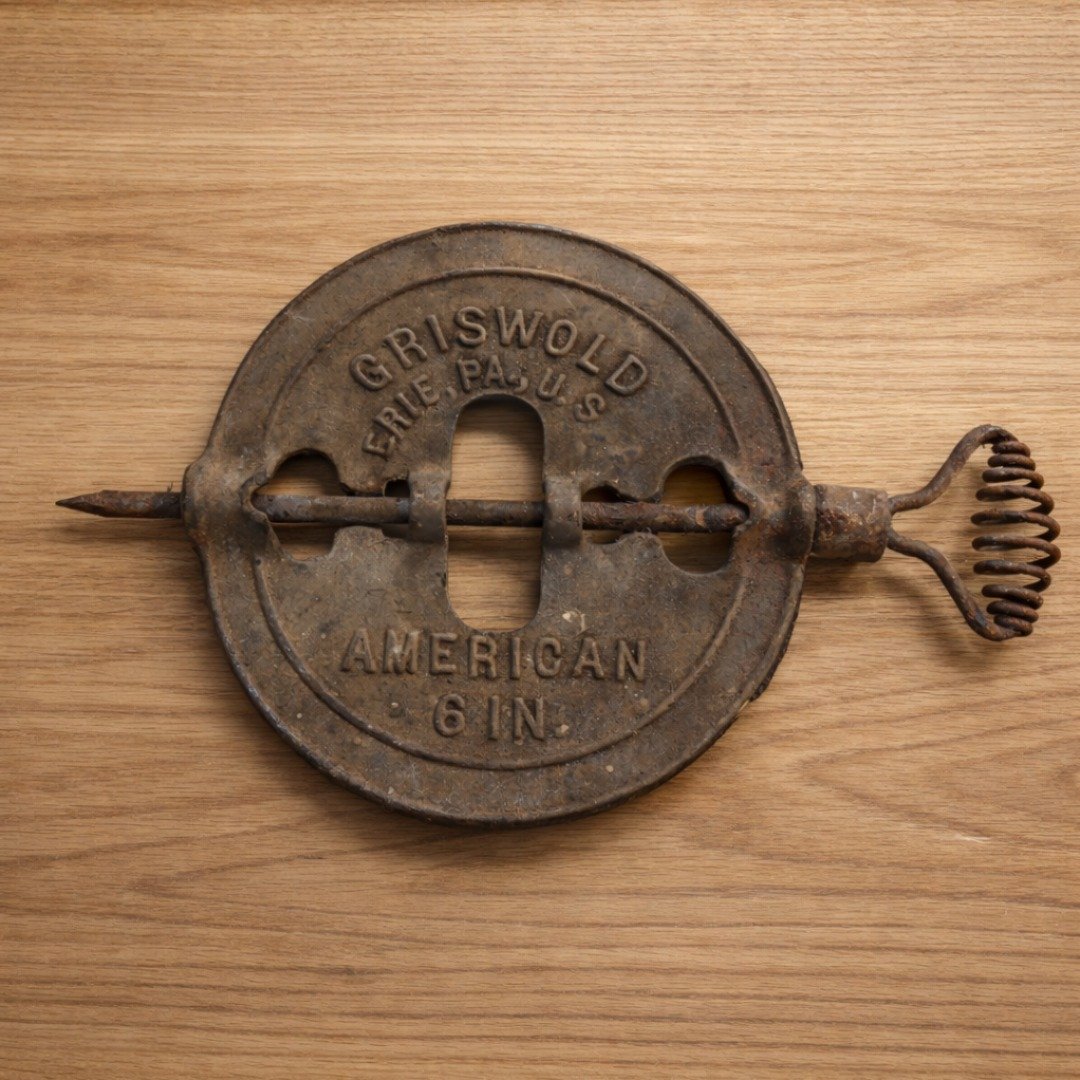
The object shown is a Griswold “American” cast-iron flue (stovepipe) damper, often described as a fireplace/wood-stove damper turner or reversible damper assembly. It is designed to sit inside a stove pipe or flue opening and be rotated from the outside using its spindle and handle.
- Griswold Fireplace/Flue Damper
- Griswold Stove Pipe Damper
- Griswold “American” Reversible Damper
Typical size markings seen on these pieces:
- 6 IN., 7 IN., 8 IN., 9 IN. (refers to the stovepipe/flue size the damper fits)
Who Made It
- Manufacturer: Griswold Manufacturing Company
- Location: Erie, Pennsylvania, U.S.A.
- Company background: Founded in 1865, Griswold became widely known for high-quality cast-iron household products, especially cookware, and ultimately closed in 1957.
When It Was Made
This style of damper is commonly associated with the 1930s era (and closely related production years). Age clues typically come from:
- The industrial design (cast-iron disk with steel spindle and spring handle)
- The raised lettering (e.g., “GRISWOLD,” “ERIE PA U.S.A.,” “AMERICAN,” and inch size)
- References to being reversible and sometimes showing patent language or numbers on the face
What It Was Used For
A flue damper’s job is to control airflow (draft) in a stove or fireplace system. By partially closing or opening the damper, the user could manage how fast the fire burned and how much heat stayed in the room.
Primary functions:
- Regulate draft: Control how much air moves up the flue
- Control burn rate: Slow down or increase how quickly fuel burns
- Manage heat output: Help keep more heat in the living space when desired
- Reduce heat loss: Limit warm air escaping up the chimney after the fire dies down
- Support safer operation: Better draft control can reduce smoke backflow and improve stove performance (when used correctly)
How the “Reversible” Design Works
These Griswold dampers were built with a steel spindle (the rod running through the center) and a handle assembly that could be oriented for different installations.
Why “reversible” mattered:
- Allowed the handle/turner to be positioned for left-side or right-side access, depending on how the stove pipe was installed
- Made it easier to use in tight spaces or when the stove sat close to a wall
- Improved practicality for different home layouts without needing a different damper model
Materials and Construction (Key Identifiers)
- Cast-iron disk/plate: The heavy circular body with raised lettering
- Steel spindle/rod: Runs through the center, used to rotate the damper
- Spring-style handle/turner: Helps grip and turn the spindle; may also provide tension and control
- Cutout openings in the plate: Allow partial airflow even when rotated toward a more “closed” position (design varies)
Markings You May See (From the Item Itself)
Depending on the exact size and version, examples of raised text include:
- “GRISWOLD”
- “ERIE PA U.S.A.”
- “AMERICAN”
- “REVERSIBLE”
- “STEEL SPINDLE”
- Size marking: “6 IN.” / “7 IN.” / “8 IN.” / “9 IN.”
- Some versions also show patent wording or numbers cast into the face
Why Collectors Care
Griswold items are sought after because the company developed a reputation for durable cast-iron products with distinctive branding and consistent quality. Even utilitarian parts like dampers appeal to collectors who focus on:
- Early American home-heating hardware
- Griswold-branded cast iron beyond cookware
- Industrial design and original surface patina
Quick Identification Checklist
- A round cast-iron plate with raised Griswold lettering
- A center steel spindle that passes through the plate
- A spring handle/turner at one end of the spindle
- The word “AMERICAN” and a stamped/cast inch size
- Often includes “REVERSIBLE” and/or “STEEL SPINDLE” on the face
In One Sentence
The 1930s Griswold “American” reversible flue damper is a cast-iron draft-control device made by Griswold Manufacturing Co. of Erie, Pennsylvania, used to adjust airflow and heat efficiency in wood stoves and fireplace flues.