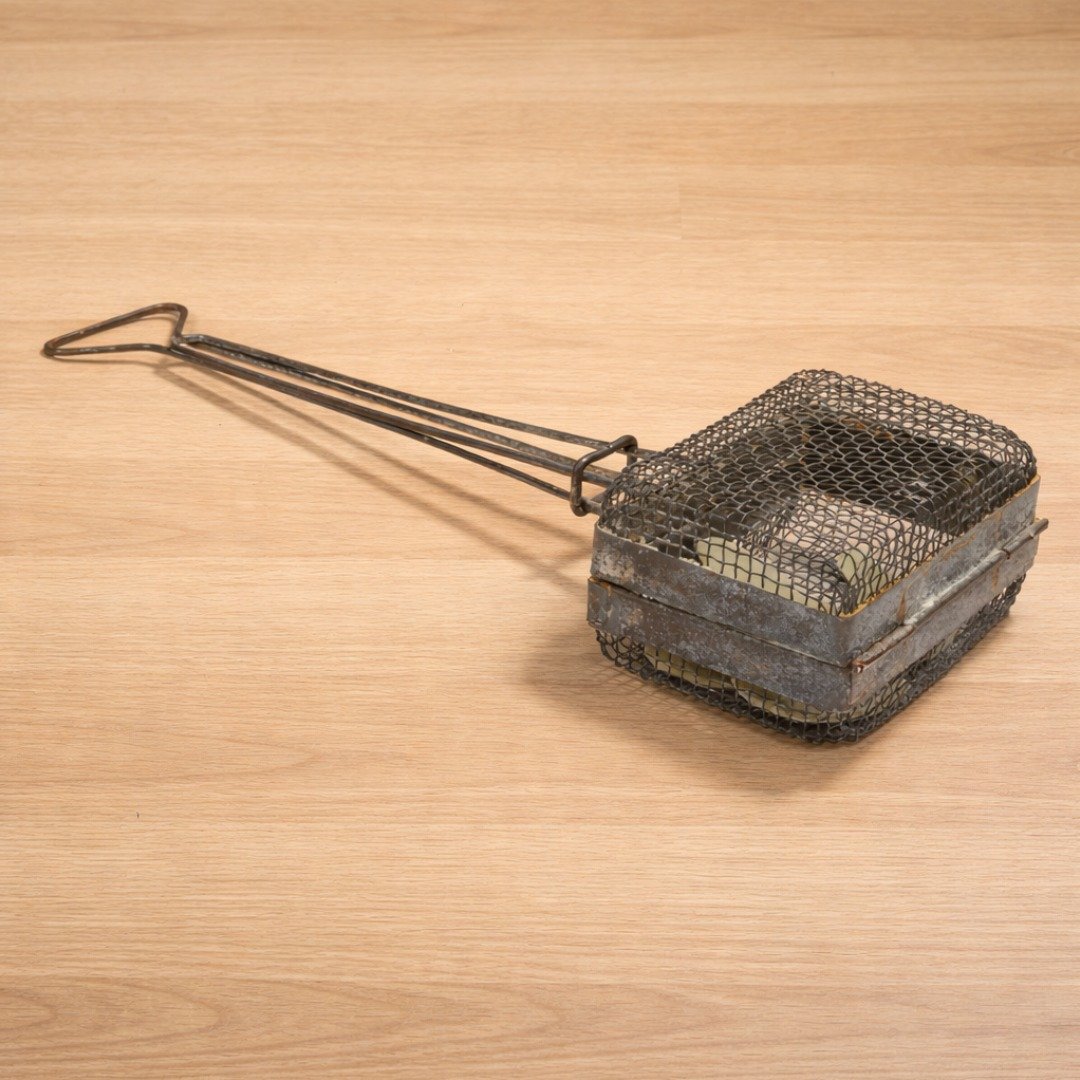
Name and Common Terms
- Soap Saver
- Antique Soap Saver
Time Period and Origin
- First widely used: Early to mid-20th century
- Documented use: Around 1946, shortly after World War II
- Geographic association: Common in Europe, especially in households where frugality and material conservation were essential
Who Created It
- Exact inventor: Unknown
- Soap savers were typically mass-produced household tools, not attributed to a single designer
- Often manufactured by local metalworking companies for domestic use
Design and Materials
- Metal wire mesh basket designed to hold small soap pieces
- Long metal handle to keep hands away from hot water
- Durable construction intended for repeated daily use
- Simple, utilitarian appearance reflecting post-war practicality
Primary Function and Use
The soap saver was created to extend the life of soap bars, especially small leftover pieces that were otherwise difficult to use.
How It Was Used
- Small soap fragments were placed inside the wire mesh basket
- The basket was dipped into hot water
- The softened soap was then rubbed or swirled to create lather
- Used for laundry, dishwashing, or general cleaning
Why It Was Important
- Reduced waste during times of material shortages
- Maximized the value of every soap bar
- Reflected a culture of resourcefulness and thrift after the war
Historical Significance
- Symbolizes post-war household efficiency
- Represents a period when everyday tools were designed for longevity and practicality, not disposability
- Today, it is valued as a collectible domestic artifact
Modern Relevance
- Considered an eco-friendly concept by modern standards
- Inspires contemporary zero-waste and sustainable living practices
- Often displayed as a vintage or antique household item