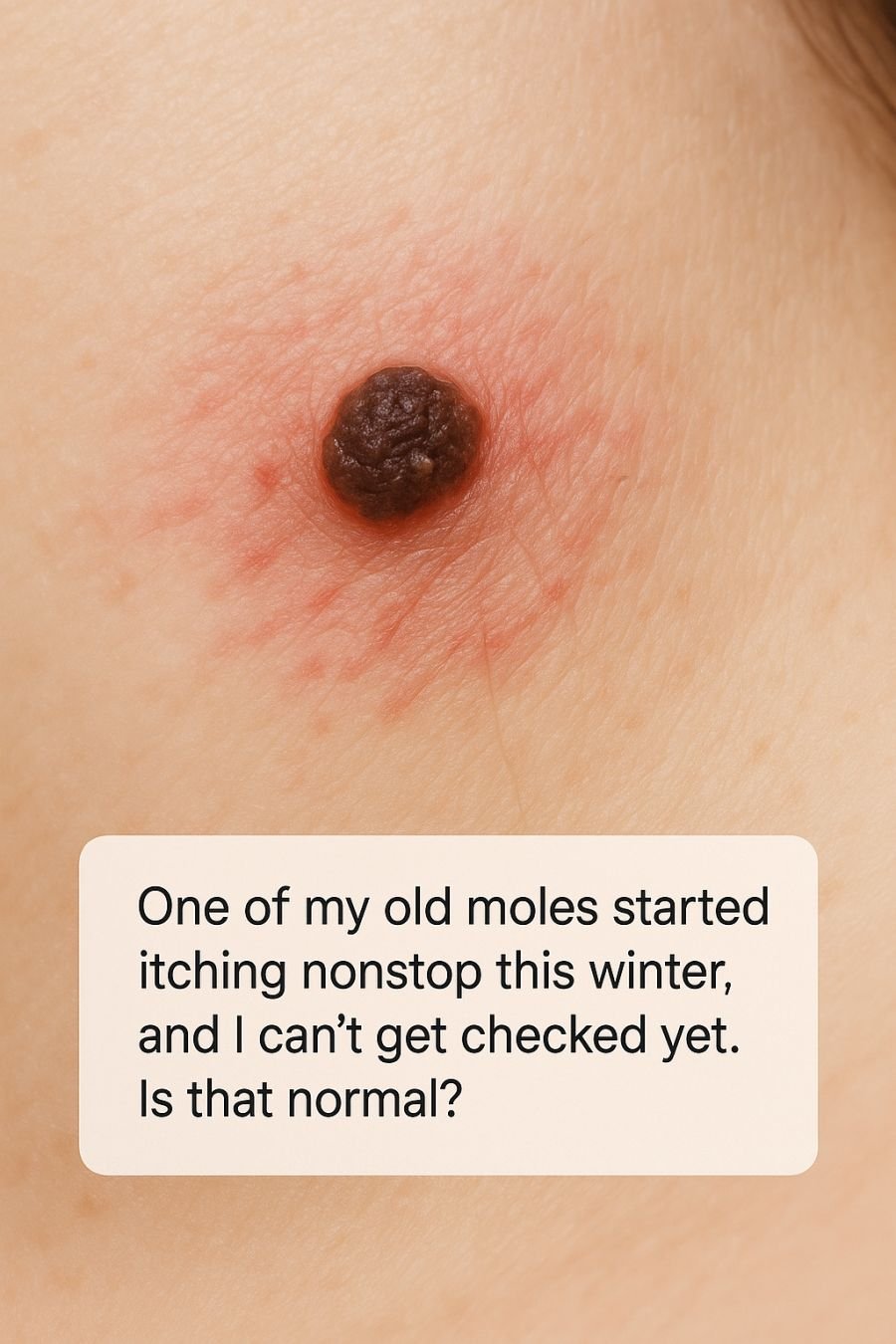
Winter brings a host of changes to our environment and our bodies. For many, the dry, cold air can lead to various skin issues, including the irritation of existing moles. While it’s not uncommon for moles to occasionally itch, persistent itching can be concerning, raising questions about whether it’s a normal seasonal change or something more serious.
Understanding the causes of an itchy mole, especially during the winter months, is crucial. While waiting for a dermatology appointment, it’s important to distinguish between normal skin changes due to winter and symptoms that might require urgent medical attention. This article will explore the possible reasons behind a mole that starts itching during the colder months and what steps you should take next.
1. Why An Old Mole Might Suddenly Start Itching in Winter
Winter’s harsh weather conditions can significantly affect your skin, including moles. The cold air outside and heated indoor environments can lead to dry skin. When the skin loses moisture, it can become itchy, causing moles to itch as well. Additionally, the skin around moles might become irritated due to increased sensitivity in winter.
Another reason for itching could be the use of different skincare products during winter, which might disrupt your skin’s natural balance. Some people switch to heavier creams that could potentially irritate sensitive areas, including moles.
2. Normal Winter Skin Changes Versus Worrisome Mole Symptoms
Dry, flaky skin is a common issue in winter and can lead to itching, even around moles. Normal winter changes include minor itching that is relieved with moisturizers. However, when a mole exhibits changes such as asymmetry, irregular borders, multiple colors, a diameter larger than 6mm, or evolving shape and size, it could be a sign of something more serious.
It’s crucial to monitor any changes in a mole’s appearance. Persistent itching, especially if accompanied by other changes, should not be ignored, as it might indicate a need for medical evaluation.
3. What an Inflamed Nevus Actually Is
A nevus, commonly known as a mole, is a benign growth of melanocytes, the cells that produce pigment. Sometimes, these cells can become inflamed due to various reasons, including friction, injury, or environmental changes, leading to itching or discomfort.
Inflammation in a mole might cause it to become red or swollen. While this can be a benign condition, persistent inflammation and itching can also be warning signs of melanoma, a type of skin cancer, and should be evaluated by a healthcare professional.
4. Common Harmless Triggers: Dry Air, Hot Showers, and Scratchy Fabrics
During winter, the air becomes significantly drier, which can lead to decreased skin moisture. This dryness can cause itchiness, particularly in sensitive areas like moles. Hot showers, a common comfort in cold weather, can strip the skin of natural oils, exacerbating dryness and itching.
Additionally, wearing warmer clothing made from scratchy fabrics can irritate the skin. Wool and certain synthetic fabrics might rub against moles, causing them to itch. Opting for softer, breathable fabrics like cotton can help reduce irritation.
5. Red Flags That Itching Could Signal Skin Cancer
While itching can often be attributed to harmless causes, certain symptoms require immediate attention. If a mole changes in size, shape, or color, it may be a sign of melanoma. Other red flags include bleeding, oozing, or a mole that becomes painful.
It’s critical to observe the mole for any changes that align with the ABCDEs of melanoma: Asymmetry, Border irregularity, Color variation, Diameter over 6mm, and Evolution of the mole’s characteristics. If these symptoms are present, a prompt evaluation by a dermatologist is essential.
6. How Long Is “Too Long” for an Itchy Mole to Persist?
Generally, an itchy mole that persists for more than a couple of weeks should be checked by a healthcare professional. Short-term itching that resolves with moisturization might not be concerning, but persistent or recurrent itching warrants further investigation.
If the mole also exhibits other concerning changes, it is advisable to seek medical advice sooner rather than later, even if you are waiting for a scheduled dermatology appointment.
7. Self-Check at Home: A Modified ABCDE Guide for Itchy Moles
While waiting for a professional check-up, you can perform a self-examination using a modified ABCDE guide. Check for Asymmetry in the mole, irregular Borders, variations in Color, an increase in Diameter, and any Evolution in the mole’s appearance.
If any of these characteristics are present in addition to persistent itching, it may indicate the need for an urgent medical evaluation. Document any changes with photographs to provide a visual record for your healthcare provider.
8. Viral Skin-Care Hacks That Can Make an Inflamed Mole Worse
The internet is full of skincare hacks, but not all are beneficial. Applying undiluted essential oils or harsh scrubs can irritate moles further, especially if they are already inflamed.
Similarly, using unverified DIY treatments from online sources can lead to adverse reactions. It’s best to stick to gentle, dermatologist-recommended products when dealing with sensitive skin areas like moles.
9. Safe At-Home Relief While You Wait for a Dermatology Appointment
To alleviate itching while waiting for an appointment, keep the area moisturized with fragrance-free lotions or creams. Applying a cool compress can also provide temporary relief from itching.
Avoid scratching the mole, as this can lead to further irritation or damage. Wearing loose, breathable clothing can help minimize friction, reducing the likelihood of further irritation.
10. When an Itchy Mole Becomes an Urgent (Not Routine) Medical Issue
If a mole suddenly changes in appearance alongside persistent itching, it becomes an urgent issue. Symptoms such as bleeding, oozing, or a rapid increase in size are particularly concerning.
In these cases, it is advisable to seek immediate medical attention rather than waiting for a routine appointment, as these could be signs of melanoma requiring prompt intervention.
11. What to Expect When You Finally Get the Mole Checked
During a dermatology appointment, the healthcare provider will examine the mole visually and may use a dermatoscope for a closer look. If they suspect any abnormalities, they might perform a biopsy, involving the removal of a small sample of skin for further analysis.
This process is usually quick and performed under local anesthesia. Depending on the results, the dermatologist will discuss the next steps, which might include monitoring or further treatment.
12. How to Protect Moles in Harsh Winter Weather Going Forward
To protect moles during winter, it’s essential to maintain skin hydration. Use a humidifier indoors to add moisture to the air, and apply a thick, fragrance-free moisturizer to your skin after bathing.Wear soft, non-irritating fabrics to minimize friction on moles. Additionally, continue to monitor your moles regularly for any changes and schedule regular skin checks with a dermatologist as part of a proactive skin health strategy.