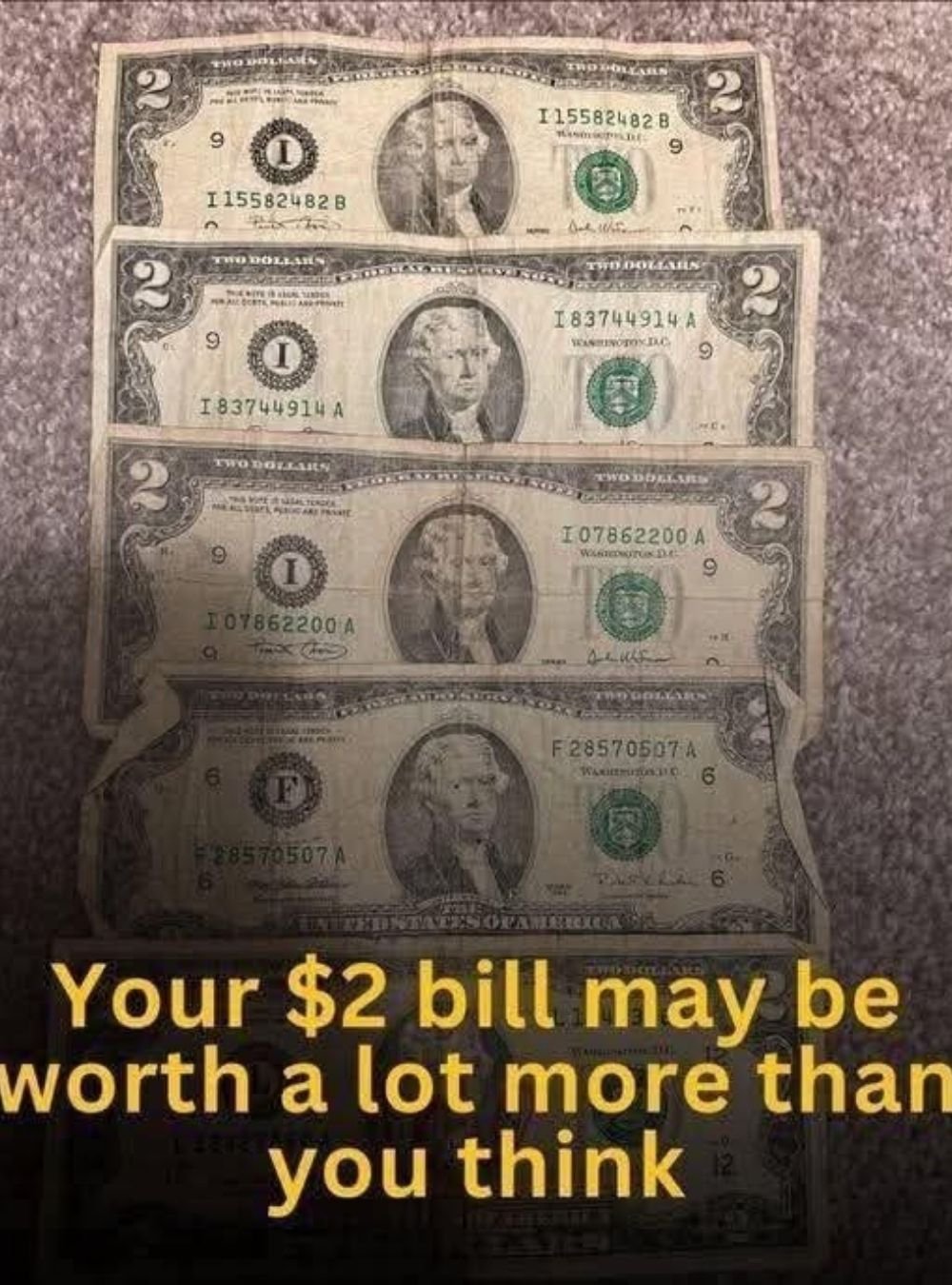
For decades, the American $2 bill has carried a sense of mystery. Many people assume it’s rare, discontinued, or even unlucky. In truth, the $2 bill is still legal tender in the United States. It continues to be printed by the U.S. Treasury, though in far smaller quantities than other denominations — which explains why most people rarely see one in everyday transactions.
Because banks and retailers typically stock fewer $2 bills, they don’t circulate as widely. That limited exposure has fueled the belief that they’re scarce. Ironically, many people who receive one choose to save it as a curiosity instead of spending it, making it appear even rarer in daily life.
But here’s where it gets interesting.
Most modern $2 bills — especially those issued after 1976 — are usually worth only their face value. However, certain examples can carry added collector appeal. Currency enthusiasts often look for:
-
Low serial numbers (such as 00000025)
-
Repeating or patterned serial numbers (like 22222222)
-
“Star notes,” which replace misprinted bills and are marked with a star in the serial number
-
Crisp, uncirculated condition
-
Bills that look brand new, without folds or wear, are far more attractive to collectors than those that have been heavily used.
Older $2 bills can be a different story altogether. Notes printed in the late 1800s or early 1900s may command significantly higher values, depending on their condition, rarity, and distinguishing features such as seal color. Some early notes featured red or brown seals, and limited production runs can increase demand among collectors.
Printing errors — misaligned seals, off-center cuts, ink smears — can also make a bill more desirable in the collector market.
So before you casually spend a $2 bill, take a closer look. Check the year, inspect the condition, examine the seal, and study the serial number. While most will be worth exactly two dollars, certain examples can attract serious collector interest — and occasionally sell for far more than their face value.