When Grief Meets Politics: The Firestorm Over Ilhan Omar’s WordsThe outrage was instant.
One interview. A few unscripted sentences about the late conservative firebrand Charlie Kirk. And suddenly, Rep. Ilhan Omar found herself at the center of a national inferno — the kind of controversy that burns through social media, cable news, and the halls of Congress before anyone has time to catch their breath.
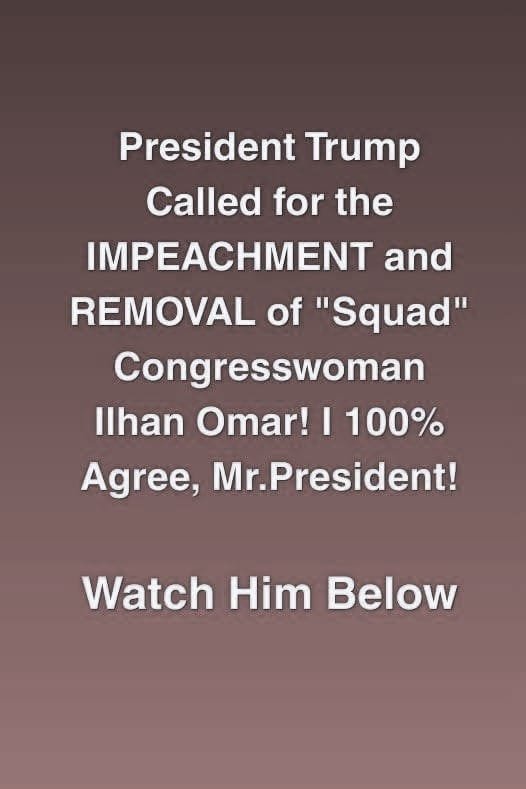
Within hours, Republican leaders pounced, Democrats braced for fallout, and timelines exploded with fury. What began as a quiet exchange about legacy and accountability turned into a spectacle of outrage, where every word was weaponized and every silence dissected. Then came the inevitable escalation: Donald Trump, mid-flight on Air Force One, calling for Omar’s impeachment — a demand that had no legal weight but maximum political impact.
The spark that ignited it all was deceptively small. Asked about Kirk’s legacy, Omar offered a characteristically blunt reflection — neither cruel nor compassionate, but unflinchingly honest. Her comments collided head-on with a raw national mood: a moment of mourning, confusion, and culture-war exhaustion. To her critics, it was indecent — an intentional jab at a man not yet buried. To her supporters, it was courage — a refusal to airbrush history just because the subject could no longer respond.
In that tension lies the heart of the storm. It was never really about one interview or one remark. It was about the question America keeps failing to answer: What does respect look like in an age where truth itself feels partisan?
To conservatives, Omar’s words became proof of moral decay — the left’s supposed contempt for tradition, civility, and loss. To progressives, the backlash felt like yet another attempt to police who is allowed to speak truth to power. Death, they argued, does not erase influence, nor should it grant immunity from critique.
Trump’s intervention transformed what might have been a two-day media scuffle into a full-blown political saga. His call for impeachment was pure theater — legally hollow but symbolically explosive. Overnight, Omar was recast not as a congresswoman with an opinion, but as a test of loyalty in America’s ongoing cultural divide. Every statement about her became a declaration of tribal identity: were you with her, or against her?
Cable networks framed it as a morality play; pundits dissected tone, timing, and intent. Meanwhile, the country was left staring into an all-too-familiar abyss — one where grief, politics, and identity collide in a blur of outrage. The boundary between mourning and debate, between empathy and accountability, has all but vanished.
In a saner age, a nation might pause before turning a funeral into a battlefield. But in today’s America, every moment — even death — becomes a stage for ideology. Omar’s remarks didn’t just question Charlie Kirk’s legacy; they forced the country to confront its own: how outrage has replaced reflection, and how sincerity, in either direction, can no longer exist without backlash.By week’s end, the noise began to fade, but the discomfort lingered — not just about what was said, but about what it revealed. In a nation where every truth risks offense and every silence is suspect, the question isn’t whether Omar went too far. It’s whether the country has forgotten how to listen at all.